


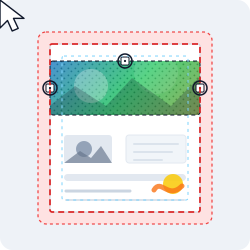
Bleed is the printed area that extends past a document's edge so no blank, unprinted paper shows when the piece is cut to size during trimming.
It's a small margin, no more than 1/8-inch (3mm) on each side, but it makes a huge difference in the final product.
When we trim your job to its finished size, we cut through that extra printed area so there's no unwanted white edges showing on the final product.
If your background colour, photo, border, shape, or graphic is supposed to go right to the edge of the page, it needs to extend past the edge before printing.
So how do you add bleed to your file for printing?
Just make your artwork a little bigger!
Still Have Questions About Bleed?
Here's a bit more info:
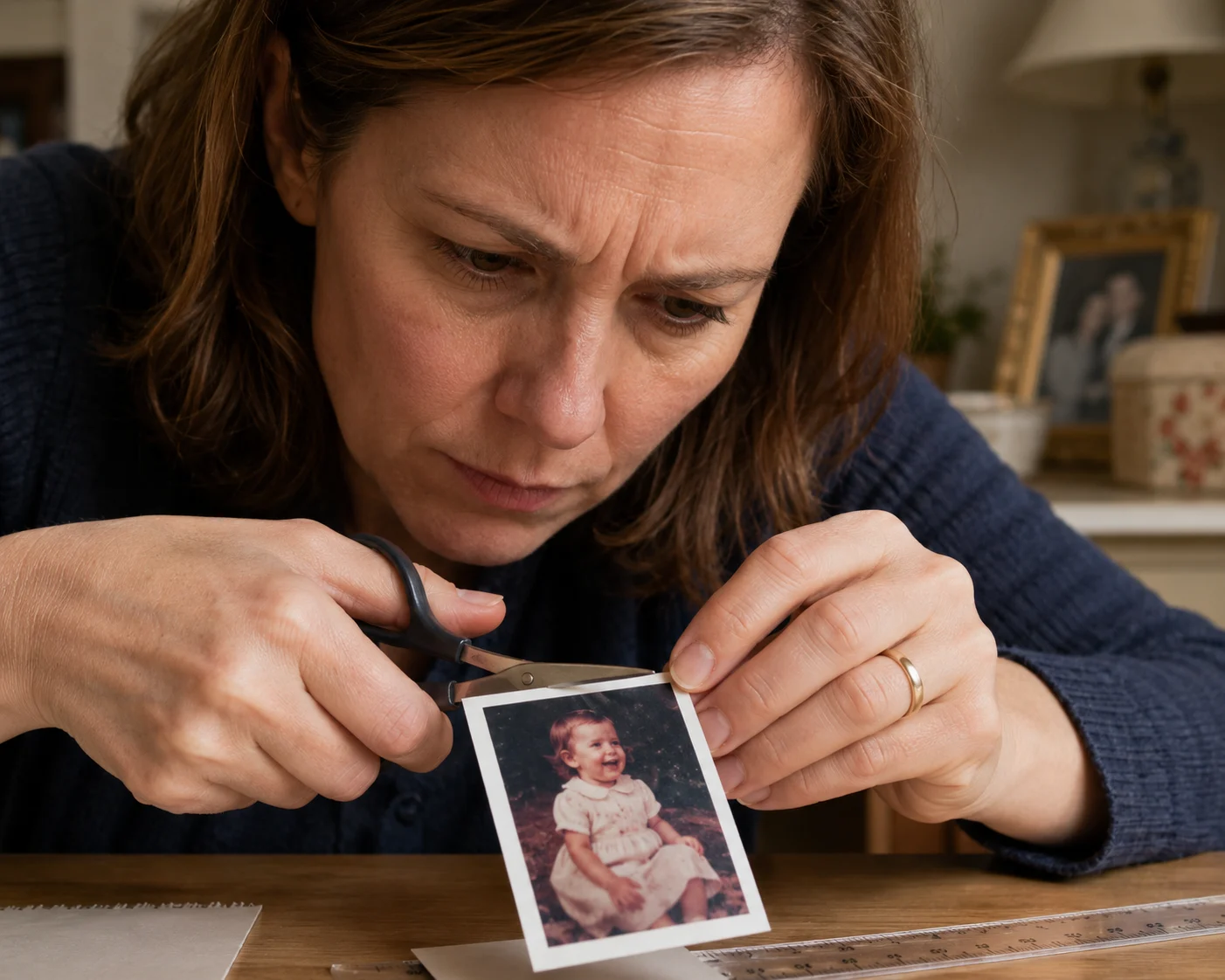
If you were to print a photo, and you didn't want to have a white border around it, you'd just cut a little bit inside the photo to get rid of the extra paper. It's a little bit smaller afterward, but no biggie for one little photo.
However, if you had a 5" x 7" photo file on your computer and wanted it to actually be 5" x 7" when you cut it out - and not smaller - you'd print the photo a little bit bigger so that when you trim inside the edge of the photo to get rid of any white, it ends up being exactly 5" x 7".
We do the same thing in printing. Bleed is just making the printed area a little bit bigger.
When we want a page to be 8.5" x 11" when it's trimmed and finished, with no white frame, we add a bit more printed image around the page edges so that the printing goes past where we plan to trim the sheet. Then, the extra bits get cut off and the page stays 8.5" x 11".
By convention, in printing we add 1/8" on each side of the printed image area past where we plan to trim. That means the total printed area is 1/4" wider, and 1/4" taller.
Can't you just trim carefully right at the edge?
Sure! But the physical properties of paper, printers, and commercial cutting machines cause small variances. Paper stretches, shrinks, and warps, depending on heat, pressure and humidity.
If you stack a bunch of printed sheets, jog them up so they are perfectly aligned edge to edge on top of each other and then slice straight down precisely on the trim mark, you'll notice that the sheets of paper line up, but the printed images don't. It's natural for there to be tiny movements of the image up, down, left, right, and it's likely that some of those tiny movements caused the printed image to move so a white edge is left afterward.
Bleed covers that problem.
Options of last-resort
We can scale-up and enlarge the document a bit, then trim it to the right size. Or, trim just inside the edge of the printed area making the document smaller. Those options can lead to not-very-nice-looking results, especially if the document requires folding, if elements need to remain centered on the page or documents must be an exact final size.
How do I add bleed using my app?
Extend each of the artwork elements (lines, shapes, photos, etc.) at least 1/8" past the edge of the page.
Adobe InDesign, Corel Draw, Affinity Designer or Publisher, and Canva all have options to set up and include a bleed area in the document set-up settings. Other programs may allow bleed, but not specifically show those options to you until it's time to print (talking about you, Microsoft Publisher!).
For example, if you're using PowerPoint and want to create a 6" x 4" card, make the slide's actual dimensions 6.25" x 4.25". Just remember that 1/8" from inside the edge of your slide is where the card will be trimmed, so you'll want to keep type or important content well away from there or it may get cut off.